
When Food Is Not Really Food

Using Wisdom To Choose Real Food In A Fake Food World
By Regina Kelley NTP BND
"Knowledge and wisdom are the only things that really lead to health."
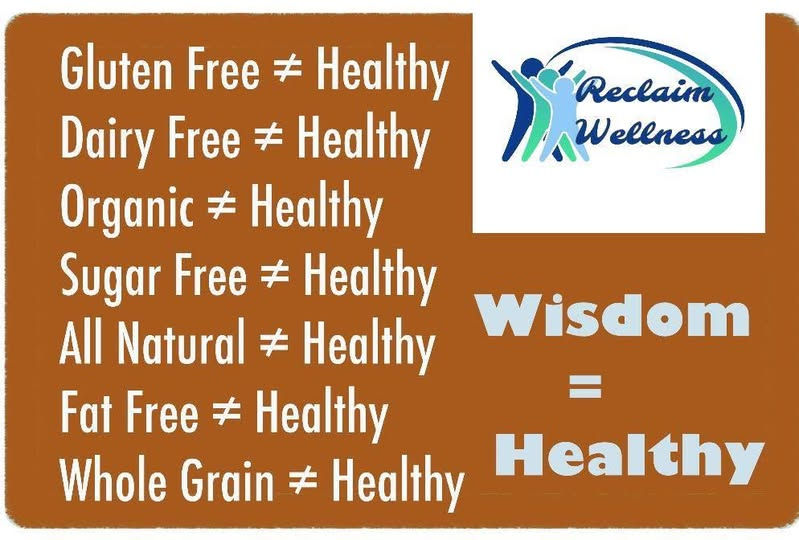
Our great grandparents did not stand in an aisle trying to decode “heart healthy,” “gluten free,” and “keto friendly” all at once. They ate food, usually grown, raised, or baked by someone they knew. Today, most of what fills the average cart is not food in the old sense of the word. It is a recipe of industrial ingredients, chemical additives, and marketing buzzwords, carefully designed to look like food and to make you feel good about buying it.
When “Food” Stops Looking Like Food
The industrialization of our food supply has shifted us from meals to “products.” Ultra-processed foods, which are made mostly from refined starches, seed oils, sugars, flavors, and additives rather than whole ingredients, now make up more than half of the calories many people eat each day. Large international studies have linked high intake of these ultra-processed foods to a higher risk of heart disease, stroke, and early death, even after adjusting for other lifestyle factors.
Short clinical trials have shown that eating a diet dominated by ultra-processed foods can disrupt hormones, increase inflammation, and lead to weight gain and metabolic changes in just a few weeks, even when the calories are matched.
In other words, this is not just theory. The body really does respond
differently to “food products” than it does to real, recognizable food.
The Problem with Feel-Good Labels
Too often we let marketing and gurus define our plates with feel-good labels that calm the conscience but do not nourish the body.
“Organic” cookies are still cookies, loaded with sugar that can stress blood sugar regulation, hormones, and the gut. Several studies have shown what researchers call the “organic health halo.” When a food carries an organic label, people tend to believe it is lower in calories and healthier overall, even when it is still a junk food like cookies or chips.
“Dairy free” and “gluten free” can be helpful for some people, but the products themselves often look nothing like the simple foods our great grandparents enjoyed as staples. The real culprits are usually sourcing, processing, and refining, not the whole food itself. A traditionally prepared sourdough bread from quality grain is a very different creature from a shelf stable, gluten free, ultra-processed loaf full of starches, gums, and preservatives.
“All natural” sounds comforting, but even E. coli is natural. Arsenic is natural. “Natural” on the front of a package is not a safety guarantee, it is a marketing choice.
Recent research has confirmed what many of us have suspected. Flashy front-of-package health claims, even ones that sound very virtuous, often do not match the true nutritional quality inside the package. Many “health claims” appear on foods that are still high in sugars, refined flours, or unhealthy fats.
Whole grain breads and pastries can still carry conditioners, preservatives, and fillers that burden the body. The words on the front are crafted to capture your attention, not to build your health.
We remove real foods, then replace them with ultra-processed substitutes that give a food-like experience, and we trade one problem for another every single time.

God’s Design, Not the Grocery Aisle, Is Our Reference Point
If we only listen to labels and trends, we end up double-minded and confused. One year fat is the enemy, then it is sugar, then it is carbs, then it is animal protein. The world changes its mind every few years. God does not.
“Wisdom is the principal thing, therefore get wisdom. And in all your getting, get understanding” (Proverbs 4:7, NKJV)
Wisdom is not the same as information. Information says, “This cereal has whole grains and added vitamins, so it must be healthy.” Wisdom asks, “Did God design my body to thrive on a bowl of sugar and synthetic vitamins every morning, or on real food He created in the first place?”
Wisdom remembers that the body is fearfully and wonderfully made. Wisdom understands that the body runs on the raw materials God placed in creation: real proteins, real fats, real carbohydrates, real minerals and phytochemicals, not just clever substitutes and laboratory inventions.
James reminds us, “If any of you lacks wisdom, let him ask of God, who gives to all liberally and without reproach” (James 1:5, NKJV). We are not left to navigate grocery aisles alone. We can invite the Holy Spirit into our daily choices, even into what lands in our carts and on our plates.
Knowledge & Wisdom: How This Looks in Real Life
Knowledge answers questions like:
What is actually in this product
How does sugar, refined starch, or seed oil affect hormones, blood sugar, and the gut
What do studies show about ultra-processed foods and long term health
Wisdom then applies that knowledge to real choices:
“This organic cookie may be slightly better sourced, but it is still dessert, not a staple.”
“This gluten free snack is full of refined starches and gums, it is not a nourishing daily food.”
“This bread has ten ingredients I cannot pronounce, maybe I need to rethink what I call ‘healthy.’”
When knowledge and wisdom work together, we stop being tossed around by marketing and trends. We are no longer impressed by whatever is on the front of the box. We are more interested in what is inside, and even more interested in food with no box at all.
Simple Principles for Wise Eating in a Complicated World
Here are some practical ways to live out this “wisdom first” approach.
1. Eat food that looks like it came from somewhere, not from a factory.
Things like eggs, vegetables, fruit, meat, beans, whole intact grains, nuts, seeds, fermented dairy or vegetables. If your great grandmother would recognize it as food, you are usually on the right track.
2. Let labels be a last resort, not your primary guide.
The best “label reading” advice is still this: choose food without a label, or food with very short ingredient lists. Aim for three to five simple ingredients that you can picture in real life.
3. Treat health labels as decorations, not truth.
“Organic,” “gluten free,” “dairy free,” “heart healthy,” “keto,” and “plant based” are descriptions, not commandments from heaven. They do not automatically mean a food is nourishing.
4. Favor traditional, time tested foods.
Bone broth, stews, slow cooked meats, soaked or fermented grains, cultured dairy, vegetables cooked in traditional fats, these are the kinds of foods generations thrived on before chronic disease exploded.
5. Watch how food actually makes you feel.
Wisdom listens to the body. Do you have steady energy or do you crash after eating certain products Do you feel bloated, anxious, or foggy after your “healthy” snacks Sometimes your body will tell the truth before the label does.
6. Make one or two upgrades at a time.
You do not have to overhaul everything at once. Replace the daily ultra-processed breakfast cereal with eggs and fruit. Swap packaged desserts for homemade treats using simple ingredients. Little by little, you crowd out the fake foods with real ones.

7. Pray over your food and your choices.
Invite the Lord into the process. “Lord, teach me how to nourish this body you gave me. Show me where I am believing marketing more than your wisdom.” That simple prayer can begin to shift your habits.
Why This Matters
This is not about legalism or fear. It is about stewardship. Your body is part of your assignment on this earth. Foggy thinking, unstable moods, and chronic fatigue make it harder to walk in your calling. Food is not your savior, but it is often either a help or a hindrance to the work God has prepared for you.
Natural health is not found in chasing the perfect label or the latest diet guru. It is found in growing in knowledge of how the body really works and pairing that knowledge with God’s wisdom for how to live in a world that constantly pulls us toward convenience over nourishment.
Knowledge and wisdom are the only path to “healthy” in a world of confusing packaging and processed products.
So, the next time you shop, pause. Look past the health claims. Ask for wisdom. Choose foods that honor the body God designed.
If this resonates with you, save and share this post to encourage a friend, because in the end, wisdom really does move all of us toward health.

Regina Kelley is a Christian holistic health practitioner who believes in healing from the inside out: Spirit, mind, and body. As a Nutritional Therapy Practitioner, Christian Herbalist, and Biblical Naturopathic Doctor she guides others toward lasting wellness rooted in faith, truth, and natural principles. She has a passion for helping others rebuild strength and vitality so they can live fully in their God given purpose.
Sources:

Comments